Alesis Quadrasynth Plus Piano Manual
| Quadrasynth | |
|---|---|
| Manufacturer | Alesis |
| Price | £1499 GBP |
| Technical specifications | |
| Polyphony | 64-note polyphonic 1 sound programs 32-note polyphonic 2 sound programs 16-note polyphonic 4 sound programs |
| Timbrality | 16-part multi-timbral[1] |
| Aftertouch expression | Yes |
| Velocity expression | Yes |
| Storage memory | QS: 128 preset 128 user programs, 100 preset, 100 user mixesQS Plus: 512 preset 128 user programs, 400 preset, 100 user mixes |
| Effects | 4-part multi-effectual (4 FX at once) |
| Input/output | |
| Keyboard | 76 keys |
| External control | MIDI, 2 programmable pedal Controllers |
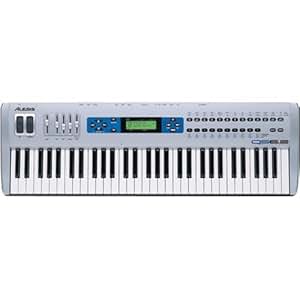
The AlesisQuadrasynth is a 76-key, 64-note polyphonic[2]PCM sample-based digital subtractive synthesizer first introduced in 1993. It was Alesis's first major foray into synthesizer production.
Function[edit]
QS Plus Piano Specifications S4 Plus Specifications The QuadraSynth Plus Piano is a greatly improved version of the original QuadraSynth New keys, more ROM (24MB), more banks (5) more sounds (640) and mixes (500), General MIDI, as well as 8MB Stereo Grand piano, and software to load your own custom samples to PCMCIA Flash RAM cards, etc.
- The QuadraSynth Plus uses custom integrated circuits, developed by the Alesis engineering team specifically for the QuadraSynth Plus. These resemble the types of chips used in computers and other digital devices. In fact, you can think of the QuadraSynth Plus as a special-purpose computer designed to generate and process audio. Although the.
- The sadly overlooked Alesis. Keyboard Kountry currently carries a small collection of parts for the Alesis keyboards but we are a. How can you not love a Kurzweil? Keyboard Kountry currently carries a small collection of parts for the Kurzweil keyboards but we are.
In the Quadrasynth's composite synthesis system, up to four 'tones' are used to create a single 'patch' or synthesizer sound. These individual 'tones' are created by using 16-bit digital single-cycle waveforms or digital samples as oscillator sources, and are then processed via a digital non-resonant filter, various LFOs and envelope generators, and so on - in the usual manner. The Quadrasynth contained 16MB of ROM containing PCM-based waveforms and samples, with the option of expanding the sample base via PCMCIA expansion cards which plug into the back of the synthesizer.
A 'patch' on the Quadrasynth can contain 1, 2, 3 or 4 of these tones. However, polyphony decreases as more tones are used. For example, a 1-tone patch would have 64-note polyphony, a 2-tone patch would have 32-note polyphony, and a 4-tone patch would only have 16-note polyphony. Patches can only be stored in the User bank. All other banks are factory presets which cannot be overwritten. The Quadrasynth was typical of synthesizers of the early 90s, featuring a digital, menu-based editing system. Editing user patches could be tedious if the user is unfamiliar with its complex editing structure or has not read the manual.
A multitimbral 'mix' (or 'performance') can contain up to 16 parts (patches). Each part can respond to the full range of the keyboard or to a configured subrange, which allows for layering and splitting. Each patch in a mix corresponds to a different MIDI channel, so that the Quadrasynth can become a multitimbral playback device for external sequencers or MIDI file players. The Quadrasynth also had a 4-bus multi effects processor, which is based on Alesis' own Quadraverb 2 stand-alone effects processor. A main function of the synthesizer is its ability to output in Quadraphonic, on the rear of the keyboard .
History[edit]
In 1995, Alesis gave the Quadrasynth an upgrade with the QuadraSynth Plus. It had more ROM (24MB), plus many more program patches. The General MIDI library was added, as well as an 8MB stereo Grand Piano sample.
In 1996, Alesis introduced the first of their [series synthesizers]. The first of these were the QS6 61-note synth and the QSR rackmount synth. Following these in quick succession were the QS7 76-note synth and the QS8 88-note synth (the flagship of the series). Essentially, the QS synths' architecture is still based on the original Quadrasynth, but with the important addition of a modulation matrix, allowing users to assign virtually any controller source to any modulation parameter. Many of the sounds in the Preset and User banks were re-written, and new samples were created, including samples of Keith Emerson's infamous Yamaha GX1 synthesizer. Emerson even wrote new patches for it, and demonstrated the new QS8 at a release party for Alesis in 1996.
In 1998, Alesis upgraded the QS line with the QS6.1, QS7.1 and QS8.1, which were basically the same as the original QS line, except that Alesis created a new 8MB Bosendorfer Stereo Grand Piano sample for them. Also, a bigger LCD screen, and a few extra assignable sliders (for performance tweaking) were included.
In 2003, Alesis decided to keep the QS series alive with the QS6.2 and QS8.2 (there was no 76-key version). This happened after Alesis declared bankruptcy in 2001 and was acquired by Numark. Basically, the x.2 line is identical to the x.1 line but with many stripped-down hardware options. There is now no ADAT port, no multiple outs (only a stereo pair), only one PCMCIA expansion slot, and no aftertouch on the 88-key model. The only other differences are a new brushed-aluminum casing (replacing the original black metal casing), plastic end-caps instead of oak (on the 88-key models), ergonomic placing of cursor buttons, and 24-bit effects and DAC's.
References[edit]
- ^'Alesis QuadraSynth'. 2015-06-06. Archived from the original on 2015-06-06. Retrieved 2018-08-22.
- ^'Alesis QuadraSynth'. Sound On Sound. May 1994. Archived from the original on 6 June 2015.
Further reading[edit]
- 'Alesis Quadrasynth'. Future Music. No. 21. Future Publishing. July 1994. p. 29. ISSN0967-0378. OCLC1032779031.
External links[edit]
Editing Effects: Chapter 7
•If [STORE] is pressed twice while editing a Program that is on a Channel other than the Effect Channel, the edited Program will be stored without altering its previous Effects settings.
•If [STORE] is pressed twice while editing a Mix (Mix Edit Mode), only the Mix parameters will be stored, not the individual Programs or the Effects Patch.
Editing Effects: Chapter 7
Copying Effect Patches
When you want a Program to use the Effects from a different Program, you must copy that other Program’s Effects into the Program you are working on. This is done within Store Mode using the “Copy Effect” function. First, select the Program which contains the Effects you wish to copy. And, of course, you can only copy Effects to Programs that are in the User Bank or on a RAM Sound Card Bank.
For more about copying effects, see page 35.
Configurations
A Configuration is essentially the starting point of any Effects Patch. You must select the Configuration you are going to use before making any other edits, since all routings and parameters change to their default settings each time you change the configuration. Each Configuration is a unique arrangement of multiple effect blocks, distributed across the four effect sends. Some effect sends may have three different effects (pitch, delay and reverb) on them. Configurations also determine where the signal to a block comes from, and where the output of each block goes to
The five Effect Configurations are:
•Configuration #1:
•Configuration #2:
•Configuration #3:
•Configuration #4:
•Configuration #5: OD>CHS>DDL>REV>LZ
The Configuration function is used to select the Configuration for the Effects Patch you are editing. Use the FUNCTION [♦] and [ ] buttons to scroll through the functions in the display until the word CONFIG is underlined. The display should look like this (from Mix Edit Mode):
Quad Knob [1] selects the Configuration. As you scroll through the various
Editing Effects: Chapter 7
Here is a
Editing Effects: Chapter 7
Configuration #1:
Pitch 1 Delay 1Reverb 1 | |||||
Mono chorus | Mono delay | Plate 1 | |||
Stereo chorus | Stereo delay | Plate 2 | |||
Mono flange | Room | ||||
Stereo flange | Hall Innova 3120 manual. | ||||
Pitch detune | Large | ||||
Resonator | Gate | ||||
Reverse | |||||
Pitch 2 Delay 2Reverb 2 | |||||
Mono chorus | Mono delay | Balance and level to Reverb 1 | |||
Stereo chorus | Stereo delay | ||||
Mono flange | |||||
Stereo flange | |||||
Pitch detune | |||||
Resonator | |||||
Pitch 3 Delay 3Reverb 3 | |||||
Resonator | Mono delay | Balance and level to Reverb 1 | |||
Delay 4 | Reverb 4 | ||||
Mono delay | Send/delay mix and level to | Reverb | |||
1 | |||||
Think of the diagram as a 'road map' showing all possible paths from the starting points (FX SEND 1 through 4) to the ultimate destinations (MAIN LEFT and MAIN RIGHT at the top of the page). The dotted lines indicate the divisions between different functional blocks, and the solid lines indicate signal paths between the blocks and controls. The diagram
Editing Effects: Chapter 7
is similar to a block diagram for a mixer, with signal moving generally from the left to the right. The number next to each function name represents one of the four effect sends. For example, Delay 2 refers to the Delay effect on effect send 2.
This Configuration #1 provides three Pitch effects, four Delay effects and one Reverb effect. The Pitch effects are found on effect sends 1, 2 and 3, but while the Pitch effects on sends 1 and 2 are stereo and their types are selectable (Mono Chorus, Mono Flange or Resonator), the Pitch effect on send 3 is mono and can only be used as a Resonator. Effect send 4 has no Pitch effect.
Each of the four sends has its own Delay effect, but while the Delay effects on sends 1 and 2 are stereo, the Delay effects on sends 3 and 4 are mono.
Each effect send can be routed through the Reverb. Since there is only one Reverb effect, it is found in the first effect send (see next section on Reverb). Reverb parameters that set the sound of the reverb itself (such as high and low decay, reverb type, predelay, etc.) are found only when 'EDITING: 1' is displayed. However, each of the 4 effect sends has controls for how much dry signal and how much effected signal are sent to the Reverb effect.
Example: The Reverb 2 block allows you to send signal to the reverb from four different points in the second effects chain: a) directly from effects send 2, b) the output of Pitch 2, c) the input of Delay 2, or d) the output of Delay 2. You can even send a combination of these to the reverb. But to change any other reverb parameters, you must return to editing Reverb 1.
Each Pitch, Delay and Reverb module has its own independent Mix output level (i.e., how much of their output is routed directly to the Main Left and Right outputs). The Mix function is where you determine how the effects will actually be heard.
Mix 1, for example, is where you can control the outputs of Pitch 1, Delay 1, and Reverb 1 to the main outputs. The Mix parameter controls how much an effect block feeds directly to the main outputs, but doesn't control how much it feeds to any other blocks that may follow it. For example, when Pitch 1’s Mix control is set to 0, it is still available as an input to Delay 1 and Reverb 1.
Think of the Mix function in the QuadraSynth Plus's effects section as being similar to the effect return control on a mixing console. For example, if Effect Send 1's Mix Reverb Output parameter is set to 0, you won't be able to hear reverb regardless of how much input you feed it from any of the effect buses.
Editing Effects: Chapter 7
Configuration #2:
Delay 1Pitch 1 Reverb 1
Mono delay | Mono chorus Plate 1 | |
Stereo chorus | Plate 2 | |
Room | ||
Hall | ||
Large | ||
Gate | ||
Reverse | ||
Reverb 2 | ||
Level to Reverb 1 | ||
Pitch 3 | Reverb 3 | |
Mono chorus | Plate 1 | |
Plate 2 | ||
Room | ||
Hall
Large
Gate
Reverse
Reverb 4
Reverb 4
Level to Reverb 3
This Configuration differs from Configuration #1 in many ways. In this Configuration, there is only one Delay effect, two Pitch effects and two Reverb effects. Effect send 1 is routed through the mono Delay, then a stereo Pitch effect, and finally a stereo Reverb effect. Send 2 has no effects of its own, but can be routed to the same Reverb effect as send 1. Send 3 is routed through a mono Pitch effect, and then a stereo Reverb effect. Send 4 has no effects of its own, but can be routed to the same Reverb effect as send 3.
Editing Effects: Chapter 7
Effect send 1’s Delay, Pitch, and Reverb can feed the Mix output directly. Unlike the first configuration, however, Pitch 3 can be routed to the Mix only after passing through Reverb 3.
Editing Effects: Chapter 7
Configuration #3:
Pitch 1 Delay 1Reverb 1 | ||||||||||||||||||||||||||||||||||||||||||||||||
Lezlie Mono delay | Plate 1 | |||||||||||||||||||||||||||||||||||||||||||||||
Plate 2 | ||||||||||||||||||||||||||||||||||||||||||||||||
Hall | ||||||||||||||||||||||||||||||||||||||||||||||||
Room | ||||||||||||||||||||||||||||||||||||||||||||||||
Hall | ||||||||||||||||||||||||||||||||||||||||||||||||
Large | ||||||||||||||||||||||||||||||||||||||||||||||||
Gate | ||||||||||||||||||||||||||||||||||||||||||||||||
Reverse | ||||||||||||||||||||||||||||||||||||||||||||||||
Pitch 2 Delay 2Reverb 2 | ||||||||||||||||||||||||||||||||||||||||||||||||
Mono chorus | Mono delay | Balance and level to Reverb 1 | ||||||||||||||||||||||||||||||||||||||||||||||
Stereo chorus | Stereo delay | |||||||||||||||||||||||||||||||||||||||||||||||
Mono flange | ||||||||||||||||||||||||||||||||||||||||||||||||
Stereo flange | ||||||||||||||||||||||||||||||||||||||||||||||||
Pitch detune | ||||||||||||||||||||||||||||||||||||||||||||||||
Resonator | ||||||||||||||||||||||||||||||||||||||||||||||||
Pitch 3 Delay 3Reverb 3 | ||||||||||||||||||||||||||||||||||||||||||||||||
Resonator | Mono delay | Balance and level to Reverb 1 | ||||||||||||||||||||||||||||||||||||||||||||||
Delay 4 | Reverb 4 | |||||||||||||||||||||||||||||||||||||||||||||||
Mono delay | Mix and level to Reverb 1 | |||||||||||||||||||||||||||||||||||||||||||||||
This Configuration is similar to Configuration 1, except it provides a stereo “Lezlie” effect on send 1, which emulates a rotating speaker effect commonly heard with organ sounds. This is followed by a Delay effect before going to the single stereo Reverb effect. Sends 2 and 3 have Pitch modules preceding Delay modules, which are then routed to Reverb 1.
Editing Effects: Chapter 7
Send 4 has only a Mono Delay effect, which may also be routed to Reverb 1.
Editing Effects: Chapter 7
Configuration #4:
Pitch 1 Delay 1Reverb 1 | Misc. 1 | ||
Mono chorus | Mono delay | Plate 1 | EQ |
Stereo chorus | Stereo delay | Plate 2 | |
Mono flange | Uninstall third-party security software. Room | ||
Stereo flange | Hall | ||
Pitch detune | Large | ||
Resonator | Gate | ||
Reverse | |||
Pitch 2 Delay 2Reverb 2 | |||
Mono chorus | Mono delay | Balance and level | |
Stereo chorus | Stereo delay | to Reverb 1 | |
Mono flange | |||
Stereo flange | |||
Pitch detune | |||
Resonator | |||
In this Configuration, note that Sends 1 and 2 are identical to that of Configuration #1. However, Sends 3 and 4 have been removed. In their place, we have added a shelving EQ module to the main outputs. This means you have bass and treble boost controls for all sounds coming out of the main outputs (not just the sounds routed to the Effects Sends).

J
If you are using Configuration #4, routing any of the Program’s Sounds to Send #s 3 or 4 will have no effect. In other words, it’s as if you routed channels of your mixing console to effects sends that aren't connected to anything.
Alesis Quadrasynth Plus Piano Manual 2
The MISC function is where you access the EQ parameters used in this configuration. This can be selected in the same manner as any other function using the FUNCTION [♦] and [ ] buttons. The shelving EQ provides bass and treble boost, and affects the entire main output.